Fidelia
Human Fidelity, measured.
The discipline to keep humans at the center of health technology.
Fidelia is a services firm helping health technology companies measure and improve Human Fidelity — the alignment between a technology and the people who stand to benefit — so their products earn trust, reach eligible patients, and are adopted in practice.
Fidelia works with companies building implantable devices, clinical AI, diagnostics, and patient-facing digital health tools. It measures how well a technology, the workflows that deliver it, and the way it is explained align with the empirically determined needs and expectations of the people who stand to benefit — and provides actionable insights to improve alignment.
We improve the performance of your device's messaging, design, and workflows — making it more likely to be offered by clinicians and adopted by patients.
A measurable standard.
The development of Human Fidelity is informed by 10 years of BRAIN-funded research, over 300 interviews, and survey data from thousands of stakeholders in implantable neural device trials including trial participants, former trial participants, patients considering trials, caregivers (parents, spouses, friends), researchers, clinicians, regulators, insurance providers, funders, and the U.S. public.
Read the research ↗Measure. Report. Actionable Advice.
The goal is to improve how a technology performs in the real world — offered by clinicians, adopted by patients.
Measure
A structured assessment of Human Fidelity: not a survey of opinions.
Report
A clear, evidence-led account of where alignment holds and where it breaks, written for engineers, researchers, executives, and investors alike.
Actionable Advice
Prioritized, practical changes to the technology, its access workflows, and its messaging, plus the support to implement them.
Communications shops → shape perception.
Compliance vendors → check boxes.
Fidelia → changes alignment.
The Fidelia Trust Index
A structured assessment of neurotechnology research and development practices organized into five evaluation domains.
Evidence of the alignment gap
Implantable neuromodulation is poised to scale — and still reaches only a fraction of the patients it could.
projected U.S. addressable market by 2045 for DBS, brain-computer interfaces, and other implantable neuromodulation devices.
annual implantable neuromodulation device use among patients with FDA-approved indications.
patients have undergone DBS surgery.
In a national survey on neurotechnologies, the public rated DBS as most invasive and risky, yet among the most likely to provide benefit.
Source ↗people in the U.S. live with treatment-resistant psychiatric conditions.
of people with drug-resistant epilepsy received DBS or responsive neurostimulation in 2019.
Source · American Journal of Psychiatry — Lázaro-Muñoz & Merner · AJP 2026
Five ways to work with us.
Each one answers a specific problem, and each one provides actionable deliverables. Most teams start with the Trust Index or a focused research sprint, then expand from there.
The Fidelia Trust Index
You can’t improve what you can’t see — we will help you promote trust with patients, clinicians, and investors.
We assess your technology with the Fidelia Trust Index — our proprietary instrument, built on the Human Fidelity framework, published in the American Journal of Psychiatry — across five domains: consent and capacity, AI transparency, neural-data stewardship, the participant lifecycle, and regulatory readiness.
A scored Trust Index report and a ranked roadmap of what and how to strengthen trust with stakeholders.
Stakeholder & Lived-Experience Research
What you assume patients, caregivers, and clinicians want is often wrong in ways that cost you adoption.
We run structured data collection with the people who decide whether your technology is offered and adopted — including those who decline the technology.
A findings report that tells you, in their words, where you earn trust and where you lose it.
ELSI 360 Analysis
The ethical, legal, and social questions you aren’t asking are the ones a regulator, an IRB, or a reporter eventually will.
We map the full ethical, legal, and social terrain your technology has to cross — before it turns into a delay or a headline.
An ELSI report: every issue named and rated, solutions identified and assigned an owner.
Strategic Governance Counsel
Earning trust isn’t a one-time audit. It’s a series of calls you make as the product develops and is implemented.
We work with your team as the standing advisor on the human side of the technology, from study design through post-market implementation.
A living governance roadmap, plus the senior judgment to act on it.
Regulatory & Translational Strategy
The science holds up. The path from bench to an approved, adopted product is where most of it stalls.
We help you build the upstream regulatory and translational narrative — how to frame, evidence, and sequence the path, so the narrative that earns approval is the one that earns the market.
A regulatory narrative and translational roadmap your team and counsel can execute.
An independent firm providing world-class research and service.
Fidelia is a services firm measuring and improving the alignment between health technologies and the people who stand to benefit.
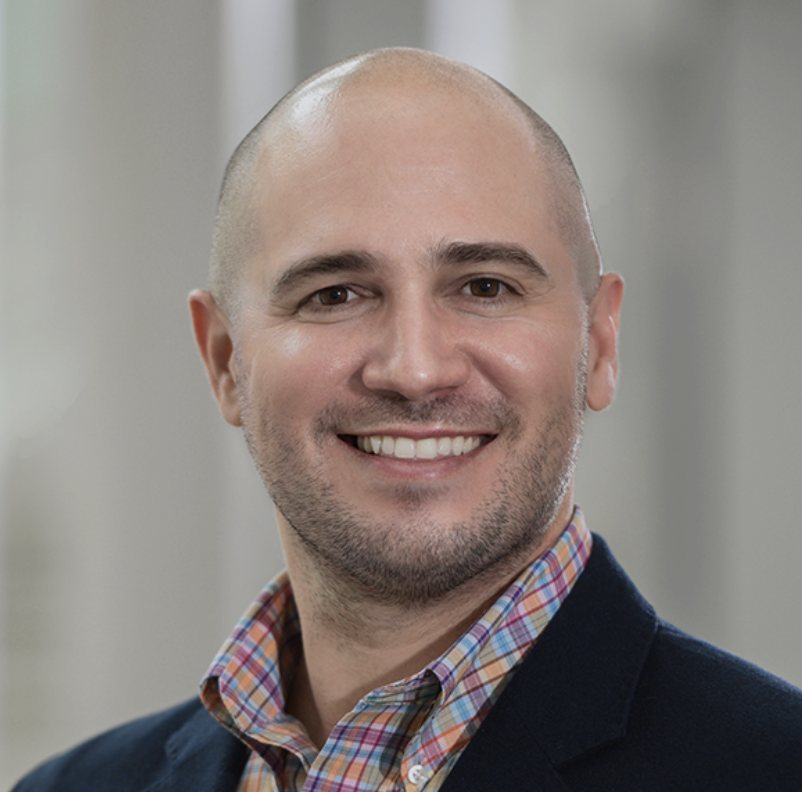
With A. R. Merner, originated the Human Fidelity framework published in the American Journal of Psychiatry.
Fidelia is the operating name of Biocomputer Solutions LLC, an independent company. Any academic appointment is stated factually and does not imply endorsement by Harvard, Mass General Brigham, or any affiliated institution.